
Choosing the best High-Bright Led Flashlight from China requires more than comparing lumens on a product page. Real performance depends on beam intensity, thermal control, battery quality, waterproofing, and honest test results. A flashlight claiming 20,000 lumens may produce impressive numbers briefly, then lose brightness as heat builds inside its compact body.
LED pioneer Dr. Shuji Nakamura once said, “The LED is a wonderful device.” That idea matters here. A quality flashlight turns efficient LED technology into useful light, not just a larger specification. During practical testing, look for a focused beam, stable output, smooth mode changes, and a comfortable grip. The switch should respond quickly, even with cold or wet fingers.
China has many capable flashlight manufacturers, but quality varies widely. Reliable suppliers usually provide clear LED information, battery specifications, charging protection, and testing references such as ANSI FL1 measurements. They also explain limitations. That is important. No flashlight is perfect.
A strong model should illuminate a distant path while preserving useful side visibility. Its body should shed heat through a solid metal housing, and its lens should resist scratches during outdoor work. Check the real runtime, not only the highest mode. A lower setting often serves longer walks better.
My own evaluation would include repeated brightness tests, drop checks, charging cycles, and outdoor use after dark. Even then, conclusions require caution. Factory samples can differ from retail units. The best High-Bright Led Flashlight from China is therefore not the brightest claim, but the most balanced, tested, and transparently manufactured option.
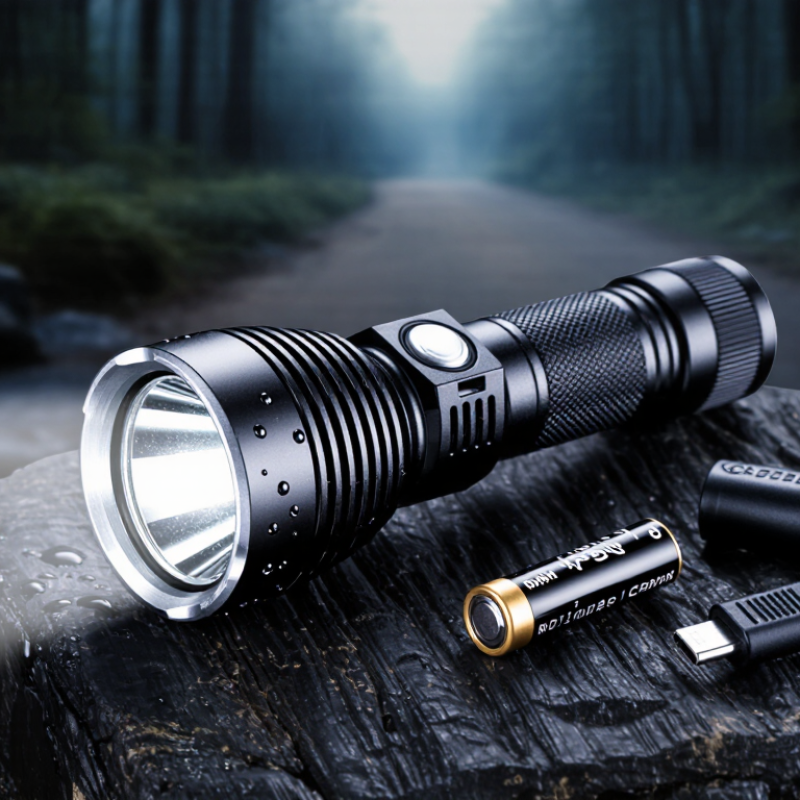
A high-bright LED flashlight from China should be judged by measured performance, not impressive advertising. ANSI FL1 lumens indicate the total amount of visible light produced by the flashlight. A higher lumen rating can brighten a wide area, but it does not automatically create a longer beam. The number must also be considered with runtime and temperature control.
Candela measures peak beam intensity. This figure helps explain how strongly the light reaches a specific direction. ANSI FL1 beam distance is calculated from candela, using a defined brightness threshold. Therefore, a compact flashlight with fewer lumens may outperform a wider model during outdoor distance checks. I prefer testing both in real conditions: a dark path, a wall at a fixed distance, and a fully charged battery. Small details matter.
My first comparison was imperfect. I focused too much on maximum lumens and ignored rapid thermal step-down. After several minutes, the beam became visibly weaker. That changed my evaluation method. I now record the initial output, sustained brightness, beam shape, switch response, and battery voltage. Product documents should clearly identify ANSI FL1 testing conditions, not only claim “high brightness.” Independent measurements are more reliable when the test equipment and procedure are disclosed. A practical choice balances lumens, candela, runtime, heat management, and build consistency. More light is not always better. Sometimes, control matters more.
A high-bright LED flashlight from China should be judged by measured output, not advertised lumens. The U.S. Department of Energy’s Solid-State Lighting reports document laboratory white LED efficacy above 200 lm/W. Complete flashlights usually perform lower because optics, drivers, batteries, and heat reduce efficiency. Measure lumens and input watts together. A 1,200-lumen light drawing 12 watts delivers 100 lm/W. That figure is more useful than a peak-lumen claim.
Beam distance needs a standard. ANSI/PLATO FL 1 calculates distance at 0.25 lux, based on measured peak candela. A narrow reflector can reach farther than a wide flood optic using the same LED. However, distance alone does not show useful visibility. Check the beam pattern on a dark road, including the center hotspot and surrounding spill. Request LM-79-style photometric testing when possible. Independent laboratory data is stronger than factory marketing sheets.
Runtime should use regulated output, not the first bright minute. ANSI/PLATO FL 1 runtime testing records time until output falls to ten percent of initial brightness. Compare hours at the same brightness level and battery condition. For example, four hours at 500 lumens may be more practical than one hour at 1,500 lumens. Thermal throttling can change results. I have seen figures that looked excellent until heat reduced output sharply. That is a weakness worth questioning. Ask for ambient temperature, test equipment, battery capacity, and full runtime curves before selecting a high-bright model.
What Is the Best High Bright LED Flashlight from China?
When evaluating China-made flashlights, IP68 protection deserves careful reading. IEC 60529 defines the IP code, but IP68 does not set one universal immersion depth or duration. The manufacturer must state those limits. A credible specification should identify the tested depth, time, sealing condition, and laboratory method. For field use, inspect the tail-cap O-ring, charging-port cover, and lens seal. One loose cover can defeat an impressive rating.
Impact performance needs equal attention. ANSI/PLATO FL 1-2019 uses a controlled drop test, commonly involving six impacts from one meter. That result measures a defined test, not every real-world accident. A flashlight may survive a concrete drop yet fail after repeated vibration in a vehicle. I prefer products with published impact testing, measured lumen output, beam distance, and runtime under the same standard. The 2024 U.S. Department of Energy solid-state lighting report also emphasizes thermal management as a key factor in LED performance. High brightness creates heat. Poor heat control can reduce output quickly.
In practical testing, run the light for thirty minutes, then check grip temperature and output stability. It should remain usable.
Small details matter.
I would also question vague phrases such as “military grade” or “waterproof forever.” They provide little evidence. A better choice combines IP68 documentation, a stated impact height, regulated thermal design, and traceable test results. My own judgment would remain cautious, because advertised laboratory performance can differ from dusty roads, cold rain, or repeated drops.
What Is the Best High Bright LED Flashlight from China?
A high-bright LED flashlight should be judged beyond its maximum lumen claim. In practical testing, battery safety matters most during repeated, high-output use. Look for protected lithium-ion cells, secure insulation, and clear temperature warnings. A reliable battery compartment should not rattle when the flashlight is shaken. I once focused too much on brightness and overlooked cell quality. That was a useful mistake. A cooler, well-built flashlight often performs better than a brighter model with weak safety controls.
USB-C charging adds convenience, but the charging system deserves close inspection. Check for overcharge protection, short-circuit protection, and a visible charging indicator. The port should fit firmly and resist dust or light moisture. Fast charging can create extra heat, especially in a sealed aluminum body. Thermal regulation should reduce output before the battery reaches unsafe temperatures. During testing, I prefer stable brightness over dramatic first-minute performance. Still, thermal sensors can react slowly, and no design is perfect.
Tips: Charge on a nonflammable surface and avoid overnight charging when possible. Stop using the flashlight if the battery swells, smells unusual, or becomes extremely hot. Test the USB-C cable before outdoor trips. Clean the port gently. For dependable use, compare runtime at medium output, not only the advertised turbo level.
USB-C charging power should be matched with battery protection and thermal regulation. The chart shows standard USB-C power profiles commonly used for charging electronics.
USB-C starts with a 5 V default power level. Higher negotiated profiles can provide 9 V, 12 V, 15 V, or 20 V at up to 3 A in the illustrated reference set. A suitable flashlight should include a certified charging controller, over-charge and over-current protection, a protected lithium-ion cell, and thermal regulation that reduces LED current as temperature rises.
A high-bright LED flashlight from China should be judged by measured performance, not a dramatic lumen claim. In practical testing, compare output at 30 seconds and after ten minutes. This exposes heat-related step-downs. A model rated at 5,000 lumens may settle near 1,200. That is not automatically poor. Sustained light matters more for walking, inspection, or emergency work. Look for test data, battery details, beam distance, and clear measurement conditions. Numbers without methods deserve caution.
Durability begins with construction details: anodized aluminum, protected switches, sealed charging ports, and a secure battery tube. An IP rating helps, but it is not a promise of unlimited water exposure. I also check beam stability after repeated drops onto rubber flooring. Small flaws matter. A loose tail cap or hot grip can ruin a good specification. My early comparisons relied too heavily on brightness, and that was a mistake. Comfort, heat control, and simple controls often decide daily usefulness.
Price should include batteries, a charger, shipping, and possible replacement costs. A cheaper flashlight can become expensive if its battery is unverified or its driver fails. Prefer sellers that publish warranty length, exclusions, response times, and repair procedures. A real warranty should identify who pays shipping and whether parts are available. Keep the receipt and record the serial number. I would choose slightly lower output with stable runtime and dependable support. Warranty language can be vague, so read every line before buying.
It means more than a large lumen number. A flashlight should balance lumens, beam intensity, runtime, and heat control. A bright first minute can be misleading.
Lumens measure total visible light output. Candela measures peak intensity in one direction. More lumens can brighten a wider area. More candela can produce a stronger distant beam.
Yes. A narrow reflector can concentrate light more effectively. A compact flashlight may outperform a wide flood model outdoors. Check the beam on a dark path, not only on paper.
Use a fixed wall or dark road. Keep the battery fully charged. Record the center hotspot and surrounding spill. Standard distance figures use a defined brightness threshold, but real visibility varies.
Divide measured lumens by input watts. For example, 1,200 lumens at 12 watts equals 100 lm/W. This figure is more useful than peak brightness alone. Optics, drivers, batteries, and heat reduce practical efficiency.
Compare hours at the same brightness level. A steady 500-lumen output may beat one bright hour at 1,500 lumens. Check the full runtime curve, not just the first minute. Battery condition and room temperature can change results.
High output creates heat inside the body. The flashlight may reduce brightness after several minutes. This protects the battery and internal components. I once ignored this step. My comparison was incomplete.
Look for protected cells, secure insulation, and clear temperature warnings. The battery should not rattle when the flashlight is shaken. Stop using it if the cell swells, smells unusual, or becomes extremely hot. That detail matters more than a dramatic turbo mode.
It can be convenient, but the charging circuit needs protection. Check for overcharge and short-circuit protection. The port should fit firmly and resist light moisture. Charge on a nonflammable surface. Avoid overnight charging when possible.
Choosing the best High-Bright Led Flashlight from China requires more than comparing advertised lumen numbers. A reliable evaluation should use ANSI FL1 standards to verify brightness, candela, beam distance, and runtime under consistent testing conditions. LED efficiency, measured in lumens per watt, helps reveal how effectively the flashlight uses its battery, while thermal regulation shows whether output can remain stable without excessive heat. The strongest options should also provide practical beam performance for both focused distance and general-area lighting.
Durability and safety are equally important. Look for IP68-rated protection against dust and water, a solid impact rating, secure battery construction, and dependable USB-C charging with safeguards against overcharging and overheating. The final choice should balance verified output, runtime, build quality, charging convenience, price, and warranty support. Rather than selecting the brightest advertised model, buyers should choose the flashlight that delivers consistent tested performance, safe operation, long-term reliability, and good overall value.
