
Choosing a Searchlight manufacturer or supplier in China takes more than comparing prices and product photos. Buyers need to understand how each light performs in real conditions. A beam that looks bright in a catalog may feel weak across a dark loading area or open-water worksite. Details matter. Ask about measured output, beam distance, battery runtime, charging time, and heat management. These figures help reveal whether a product fits its intended use.
This guide introduces practical ways to assess suppliers, from factory capabilities and quality checks to customization and after-sales support. Look closely at housing materials, seals, switches, and mounting points; small parts can affect reliability after repeated use. Request clear specifications and, where possible, a sample for hands-on evaluation. Check that test reports and certifications match the exact model being offered. Not every claim holds. Supplier listings can change, and a strong sales presentation is not proof of consistent production. Compare responses, ask how defects are handled, and confirm lead times in writing. A careful review cannot remove every risk, but it can make differences easier to spot. The aim is not to name one universal “best” supplier. It is to help readers make a better-informed shortlist based on their operating needs, budget, and evidence they can verify.
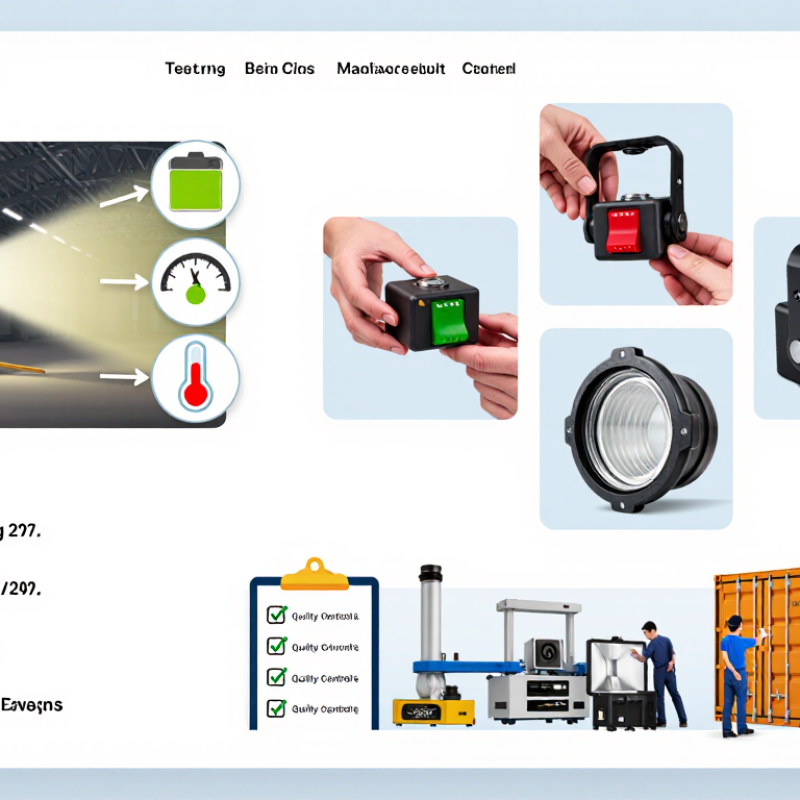
A searchlight is a directional lighting system built to place a concentrated beam on a distant area. Its performance depends on more than lamp power. The U.S. Department of Energy’s 2022 Solid-State Lighting R&D Opportunities report notes laboratory LED-package efficacy above 200 lumens per watt. That figure describes the light source under test, not a complete searchlight; optics, heat, and electrical losses reduce delivered output. A useful distinction.
The light source sits inside a housing with a reflector or lens that shapes the beam. A parabolic reflector gathers light and sends it forward, while a lens can refine the beam’s spread. A narrow beam reaches farther but illuminates less ground. The driver regulates current, and the heat sink moves warmth away from the LED to limit performance loss. The power supply may be a battery or an external connection. Seals, brackets, and adjustment joints also matter: a loose mount can shift the beam, and poor sealing can admit moisture. In field checks, operators should compare beam uniformity and operating temperature, not just quoted lumens. DOE’s report uses efficacy, measured in lumens per watt, to compare sources; real-world results still depend on the whole fixture and its conditions. That caveat is easy to overlook.
Searchlights use a focused beam to illuminate distant or specific areas. Beam angles vary by optical design and application; the ranges below are typical examples, not fixed standards.
How the components work: The light source produces illumination, the reflector or lens directs and shapes the beam, the housing protects the assembly, and the mounting system supports aiming. A narrower beam concentrates light over a smaller area.
Chinese manufacturers produce several searchlight types for different work environments. Handheld models suit inspections, emergency checks, and outdoor maintenance. Their compact bodies and wrist straps make them easy to carry, though extended use can tire the hand. Rechargeable LED searchlights are common for portable tasks. Look for a sealed charging port, a stable grip, and controls that remain usable with gloves. Some models offer adjustable beams, shifting from a narrow spot to a wider flood.
Vehicle-mounted searchlights typically use a swivel base, allowing operators to direct light toward roadside work areas or distant objects. Marine searchlights often feature corrosion-resistant housings and sealed switches to handle spray and damp decks. For temporary sites, tripod-mounted units raise the beam above workers and equipment. Larger tower lights can illuminate broad construction or inspection zones.
Details matter. Ask suppliers for beam distance, runtime, ingress protection, and test conditions, since figures can vary between products. A brighter beam is not always better; glare can hide nearby hazards. The category labels can be confusing, so compare the actual beam pattern and operating time with the task. Some specifications still leave questions.
Evaluating searchlight manufacturers and suppliers in China starts with the intended working conditions. A unit for a coastal patrol boat faces different demands from one used at a construction site. Ask for beam distance, power consumption, operating temperature, and ingress-protection test details. Request a photometric report, not only a bright-looking product photograph. Numbers matter.
Review samples under realistic conditions. Check beam focus, handle comfort, cable fittings, and heat after several minutes of operation. A supplier should explain how each model is assembled and inspected. Ask for inspection records and a clear warranty process. These details reveal more than a polished catalogue. If possible, compare two samples side by side in a dark outdoor area. I have found that beam claims can be difficult to judge from specifications alone.
Communication is part of quality control. Send a written list of requirements and see whether the supplier answers each point directly. Confirm lead times, packaging, spare-part availability, and how design changes are documented. Vague answers deserve follow-up. Some buyers focus heavily on price; that can be a mistake when replacement parts are hard to obtain. Still, supplier claims should not be accepted without evidence. Request relevant test documents, verify that they match the exact model, and keep approved sample details on record before placing a larger order.
Chinese searchlights are designed to project a concentrated beam across large outdoor areas. Common features include adjustable focus, multiple brightness settings, weather-resistant housings, and handles or mounting brackets for repositioning. Some models use LED light sources, which can reduce power use and heat compared with older lamp designs. Actual performance depends on beam angle, battery capacity, optics, and build quality, so a high lumen figure alone does not tell the whole story.
These lights serve search-and-rescue teams, construction crews, security staff, and marine operators who need visibility beyond ordinary work lamps. A narrow beam can help inspect a distant hillside or shoreline, while a wider setting is more useful for checking a work zone. In practice, glare and uneven ground can make a powerful beam less helpful than expected. Buyers should check runtime at the brightness level they plan to use, charging options, weight, and the stated ingress protection rating. Specifications are useful, but field testing matters too.
Tips: Test the beam outdoors before regular use. Compare its reach and edge brightness, and keep a spare battery available. A small detail, but important. Some supplier specifications may omit runtime test conditions, so ask how those figures were measured.
Choosing a searchlight supplier takes more than comparing catalog prices. Start with the job: a vessel’s deck, a worksite perimeter, or a vehicle exposed to dust and vibration. Match beam distance, lighting pattern, voltage, and mounting style to real conditions. Ask for photometric data and test reports, not just claims about brightness. A narrow beam may reach farther, while a wider beam can reveal nearby obstacles. Neither is better in every situation.
Tips: Request a sample or a live demonstration. Check the beam on a dark surface, inspect the cable seals, and ask how replacement parts are supplied. Small details matter. Confirm warranty terms, production lead times, and how technical questions are handled after delivery.
Compare suppliers on consistency as well as specifications. Ask whether each unit is checked for water ingress, vibration resistance, and electrical performance before shipment. A clear inspection record is reassuring, though paperwork alone cannot prove long-term reliability. Discuss custom requirements early, and get agreed specifications in writing. One detail buyers sometimes miss is service access: a lamp that is difficult to open can turn a simple repair into downtime. I would also leave room for uncertainty; field conditions often reveal needs that a product sheet does not.
| Comparison Dimension | What to Compare | Evidence to Request | Why It Matters |
|---|---|---|---|
| Product application and design | Confirm whether the supplier makes handheld, vehicle-mounted, marine, industrial, or other searchlights. Compare beam pattern, mounting options, controls, and intended operating environment. | Product drawings, installation instructions, application references, and a written specification for the proposed model. | A product designed for one use may not suit another. For example, a marine installation can require suitable corrosion protection and mounting provisions. |
| Optical performance | Compare light source, beam angle, luminous flux, peak beam intensity, and claimed beam distance. Check whether figures refer to the complete luminaire and how they were measured. | Datasheets and test reports identifying the test method, measurement conditions, and exact model configuration. | Beam distance and brightness are not interchangeable. Peak intensity and beam shape help show how well a light can illuminate a target at distance. |
| Electrical compatibility | Check rated input voltage, power consumption, connector type, polarity protection, and compatibility with the intended power system. | Electrical datasheet, wiring diagram, and confirmation of the voltage range under load. | Compatibility reduces installation problems and helps prevent damage caused by an unsuitable supply or connection. |
| Environmental protection | Compare ingress-protection claims, operating temperature range, corrosion resistance, vibration resistance, and any salt-spray or shock requirements relevant to the application. | Reports or certificates for the exact model, including the test standard, test conditions, and issuing laboratory where applicable. | Environmental claims should match the intended installation. An IP rating addresses defined ingress tests and does not, by itself, prove resistance to corrosion, impact, or every outdoor condition. |
| Materials and construction | Review housing material, lens material, seals, fasteners, finish, heat management, and serviceability. | Bill of materials or material declarations, product samples, assembly details, and maintenance instructions. | Construction affects durability, weight, heat dissipation, repair options, and suitability for the operating environment. |
| Compliance and documentation | Identify the regulations and standards applicable to the destination market and product type. Check that documents cover the offered model and configuration. | Current declarations, applicable test reports, labels, manuals, and traceable model references. Verify documents with the issuer where needed. | Compliance is market- and product-specific. A general certificate or a document for a different model may not establish that the supplied product meets the buyer's requirements. |
| Manufacturing and quality control | Ask how incoming components, assembly, final inspection, and product traceability are controlled. Compare the supplier's process for handling defects. | Quality-system documentation, inspection plan, sample inspection records, and a description of corrective-action procedures. | Consistent processes and traceability can make repeat orders more predictable and help resolve quality issues. |
| Customization and engineering support | Compare available options such as beam configuration, cable length, connectors, mounting brackets, housing finish, and private-label packaging. | Written confirmation of the proposed changes, drawings, sample approval process, and any tooling or minimum-order requirements. | Clear engineering review helps ensure that customization does not compromise performance, safety, or compliance. |
| Sampling and verification | Check sample availability, sample lead time, evaluation criteria, and whether the production order will match the approved sample. | Commercial sample terms, a signed specification, and an agreed pre-shipment inspection or acceptance plan. | Testing a representative sample can reveal fit, beam, wiring, and finish issues before a larger order is placed. |
| Capacity and lead time | Compare quoted production lead time, order capacity, component availability, and arrangements for schedule changes. | A dated production schedule, capacity confirmation, and written terms for shipment and delays. | Lead times depend on configuration, quantity, and component availability; obtain a quote for the specific order rather than relying on a general estimate. |
| Warranty and after-sales service | Review warranty duration, covered failures, exclusions, claim process, replacement-part availability, and technical response arrangements. | Written warranty terms, service contact details, and an explanation of the process for troubleshooting and returns. | Clear support terms help the buyer understand the cost and process of resolving issues after delivery. |
| Total landed cost | Compare unit price alongside tooling, packaging, testing, freight, insurance, import duties, taxes, and payment terms. | An itemized quotation with currency, Incoterms® rule and named place, quotation validity, and payment schedule. | The lowest unit price may not produce the lowest overall purchasing cost. Compare quotations on the same order quantity and delivery basis. |
| Supplier verification | Confirm the supplier's legal identity, business scope, manufacturing or sourcing role, and consistency between the contracting party and payment beneficiary. | Business registration information, factory or production-process evidence where relevant, references, and a contract identifying the responsible seller. | Verification helps clarify who is responsible for product quality, documentation, delivery, and after-sales obligations. |
Practical comparison tip: Request the same specification, quantity, destination, and delivery terms from each shortlisted supplier. Treat performance figures and certifications as claims to verify against documents for the exact model being quoted.
A compact handheld model works for equipment checks and outdoor maintenance. A wrist strap helps, though long use can tire your hand.
Check the grip, sealed charging port, and glove-friendly controls. Adjustable beams can shift from a narrow spot to a wider flood.
A swivel base helps direct light toward roadside work or distant objects. Confirm the beam can reach the intended area without creating nearby glare.
Look for corrosion-resistant housing and sealed switches. Spray happens. Ask for test details that match damp deck conditions.
Request beam distance, runtime, power use, operating temperature, and ingress-protection test details. A bright product photo proves little.
Yes. Compare samples outdoors in low light, then check beam focus, handle comfort, cable fittings, and heat after several minutes.
Ask for assembly details, inspection records, and a clear warranty process. Verify that test documents match the exact model.
Get lead times, packaging details, spare-part availability, and design changes in writing. Keep the approved sample details on record. I still find specification sheets hard to judge alone.
This guide explains what a Searchlight is and how its main components—including the light source, reflector, housing, power system, control mechanism, and cooling structure—work together to produce focused, long-range illumination. It also reviews the major types manufactured by Chinese suppliers, such as handheld, vehicle-mounted, marine, industrial, rechargeable, LED, and remote-controlled models, helping buyers understand which design suits different operating environments.
The article further outlines how to evaluate Searchlight manufacturers and suppliers in China by examining product quality, optical performance, materials, certifications, production capacity, customization services, communication, delivery reliability, and after-sales support. It highlights important features such as brightness, beam distance, durability, waterproof construction, energy efficiency, portability, and control options, along with applications in transportation, outdoor activities, emergency response, security, construction, and industrial inspection. Finally, it offers a practical approach to comparing suppliers and selecting a dependable partner according to technical requirements, budget, order volume, and long-term cooperation goals.
