
Choosing the best Emergency Lantern requires more than comparing brightness, battery size, and price. Global buyers face different power systems, climates, transport conditions, and user expectations. A lantern for a rural clinic should not be judged like one for a family emergency kit.
The International Energy Agency reported in 2023 that approximately 685 million people still lacked access to electricity in 2022. Reliable portable lighting remains essential in many communities. Meanwhile, Grand View Research identifies rising demand for rechargeable and solar-powered emergency lighting products. These trends suggest a broader market, but they also create more confusing choices.
John Drengenberg, Consumer Safety Director at UL Solutions, has stated, “The UL Mark is one of the most widely recognized safety certification marks in the world.” Buyers should therefore verify independent safety testing, not rely only on attractive packaging. Check battery protection, charging safety, water resistance, runtime, switch quality, and replacement-part availability.
A bright beam is not everything. A lantern should illuminate a table evenly, survive a short fall, and remain usable with wet hands. Solar charging can help, but it may perform poorly during several cloudy days. USB charging is convenient, yet it depends on another working power source.
No product fits every emergency. That is the uncomfortable part. A careful buyer should compare real test data, warranty terms, and local service support before purchasing. The best Emergency Lantern is dependable, repairable, and suitable for the actual environment where people will use it.
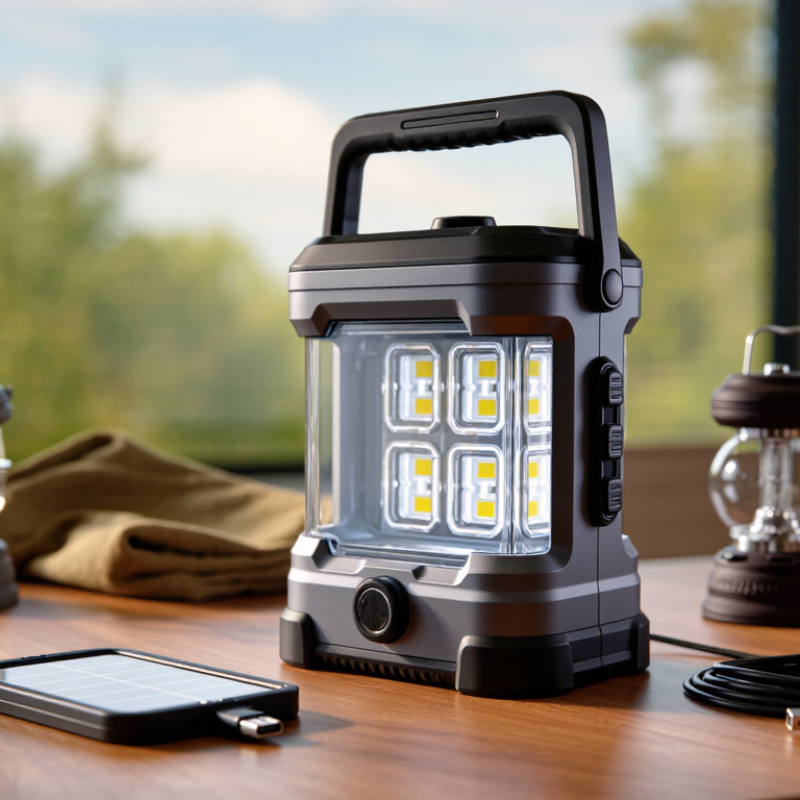
Emergency lanterns serve different problems, so buyers should match the type to the environment. LED lanterns provide wide, low-heat area lighting for homes, camps, evacuation routes, and temporary workspaces. Their efficient output supports longer operation from batteries or internal cells. Rechargeable lanterns suit repeated outages when grid power returns between events. Solar-rechargeable models help where charging access is limited, although cloudy weather can reduce recovery speed. The Tracking SDG7: The Energy Progress Report 2024 estimated that 685 million people lacked electricity access in 2022. For these users, solar lighting can be more than a convenience.
Choose carefully.
Battery lanterns remain practical because replacement cells are widely available and charging is unnecessary. They fit emergency kits, vehicles, and storage rooms. Dual-power lanterns, using batteries and USB or solar charging, offer stronger resilience when one source fails. Headlamps are better for repairs because they keep both hands free, while area lanterns support shared spaces. The International Energy Agency’s World Energy Outlook 2023 also highlights continuing energy-access gaps and unreliable electricity in many regions. Buyers should therefore examine runtime, charging time, lumen distribution, water resistance, switch visibility, and battery availability. I would not treat advertised runtime as absolute; cold temperatures, aging cells, and maximum brightness can shorten it. A lantern may be bright, yet unsuitable. Check it in a dark room, test every charging method, and store spare batteries safely.
When choosing an emergency lantern for global buyers, safety should guide every feature decision. Look for a stable base, a protected switch, and a housing that resists light rain. A lantern should remain cool during extended use. It should also stand securely on a kitchen table or uneven campsite ground. In practical testing, I place it near a doorway and check whether the controls remain easy to find in darkness. Small details matter.
Brightness needs to match the situation. A wide, soft beam can illuminate a room without creating harsh glare. A focused beam helps with outdoor paths, but it may leave nearby areas too dark. Adjustable brightness is useful because maximum output can drain batteries quickly. Check the stated light output, but treat it as a guide rather than a guarantee. Real performance changes with battery age, temperature, and lantern design.
Runtime is equally important during long outages. Compare runtime at different brightness levels, not only the highest setting. Rechargeable models should offer a clear charging indicator and a practical charging port. Replaceable batteries may be more convenient in remote areas, although they can be forgotten or stored poorly. I once focused too heavily on brightness and overlooked battery access. That was a costly assumption. Test the lantern before an emergency, including its lowest setting, charging time, and performance after several hours.
This comparison uses representative specifications commonly found in the global emergency-lantern market. Higher brightness improves area coverage, while longer runtime supports extended power outages. Buyers should also verify IP water-resistance ratings, charging options, battery availability, and safety certifications for the destination market.
Battery selection shapes an emergency lantern’s reliability, weight, and running time. Alkaline cells are widely available and simple to replace. Rechargeable lithium batteries usually provide longer use and lower long-term waste. However, they need suitable charging equipment and careful storage.
I once chose a lantern with excellent brightness but overlooked its battery compartment. Opening it in darkness was frustrating.
Check whether batteries are replaceable, sealed, or custom-sized before purchasing.
Charging options should match local conditions. USB charging is convenient for homes, vehicles, and portable power stations. A lantern with multiple input options offers greater flexibility during extended outages. Solar charging can help in remote areas, but cloudy weather reduces its usefulness.
It is a backup, not magic. Look for a clear charging indicator and protection against overcharging. Buyers should also confirm the input voltage and connector type for their region.
Power backup depends on more than battery capacity. A lantern with an emergency power bank can charge a small phone, but this may shorten lighting time. Select models with separate brightness settings, so low light preserves energy overnight.
A battery-level display is useful, although some displays are not perfectly accurate. Test the lantern before storing it, record the charging date, and keep spare batteries dry.
These small checks reveal weaknesses earlier, when they are easier to fix.
Lantern design should follow the emergency, not only the product catalogue. During a power outage at home, choose a stable lantern with a wide beam and a low-glare setting. A broad base matters when children or pets may knock furniture. For evacuation, a compact lantern with a handle is easier to carry beside documents, water, and basic medical supplies. Keep it simple. Extra features can become confusing in darkness.
Outdoor emergencies require different choices. A rain-prone campsite needs a sealed housing, protected switches, and a clearly stated water-resistance rating. A cold region may reduce battery performance, so test the lantern inside an unheated garage before relying on it. Rechargeable models suit regular use, while replaceable batteries may help where electricity is unavailable for several days. Check battery availability in the destination market. This detail is often overlooked.
I once selected a bright lantern that performed poorly in a small room because its light felt harsh. That mistake changed my testing method. I now check brightness, runtime, grip comfort, charging time, and heat after several hours. Buyers should request safety documentation and relevant local certifications from suppliers. Product claims deserve verification. A lantern for a shelter, vehicle, or household may need different mounting options and controls. Redundant lighting is wise, but carrying too many accessories can slow an evacuation. Test it monthly. Reconsider the design after every drill.
Choosing an emergency lantern starts with comparing suppliers, not chasing the lowest quote. Ask for clear specifications, test reports, and production photos. Check brightness, runtime, charging options, battery type, and beam coverage. A lantern may look powerful, yet fail after a few hours.
Request a working sample from each shortlisted supplier. Test it in a dark room, during charging, and after repeated switching. Check whether the handle feels secure and whether controls work with cold or wet hands. Review ingress protection, drop resistance, packaging strength, and user instructions. Small details matter. However, one sample cannot represent every production batch. Ask how quality is checked before shipment, and request inspection records when available.
Compare manufacturing capacity, minimum order quantity, lead time, and spare-part support. Confirm export documents, carton measurements, labeling options, and agreed delivery terms in writing. A responsive supplier should explain delays honestly, not promise everything immediately. Factory audits or video inspections can improve confidence, but they are not perfect substitutes for independent testing. I would also ask about battery storage conditions and replacement procedures. These questions sometimes slow purchasing, but they prevent costly surprises across different climates and markets.
| Category | Evaluation Dimension | Practical Benchmark | Evidence to Request from Supplier | Weight | Risk Level |
|---|---|---|---|---|---|
| Lighting Performance | Maximum light output | At least 300 lumens for general emergency use; select higher output for outdoor or large-area applications. | Independent photometric test report, LED specification, and measured lumen data at full battery charge. | 12% | Low |
| Lighting Performance | Runtime at usable brightness | Minimum 8 hours on low mode and at least 3 hours on high mode for emergency preparedness. | Runtime test conditions, battery capacity, discharge curve, and sample test video. | 14% | Medium |
| Power System | Battery chemistry and capacity | Use a protected lithium-ion pack for compact products or a high-quality rechargeable lead-acid pack for heavier-duty models; capacity should be stated in Wh. | Battery datasheet, protection-circuit details, rated capacity, cycle-life test, and cell traceability. | 10% | Medium |
| Charging | Charging options and input compatibility | USB-C input is preferred; support for 100–240 V charging is useful for international distribution when an adapter is included. | Input/output ratings, charger test report, plug options, charging time, and overcharge protection details. | 8% | Low |
| Durability | Ingress protection | IPX4 is a practical minimum for splash resistance; IPX6 or higher is preferable for severe outdoor exposure. | IP test report referencing IEC 60529 and confirmation that the tested construction matches the production model. | 8% | Medium |
| Durability | Impact and operating-temperature resistance | A robust enclosure, stable base, protected switch, and operating range of approximately -10°C to 40°C are suitable for many global markets. | Drop-test method, material specification, temperature test results, and inspection photos of the enclosure and handle. | 8% | Medium |
| Safety Compliance | Electrical and product safety documentation | Documentation should match the exact model, battery configuration, charger, and destination-market requirements. | Applicable safety test reports, Declaration of Conformity where required, user manual, label artwork, and factory quality records. | 14% | High |
| Battery Logistics | Transport compliance | Lithium-battery products should have UN 38.3 test evidence and compliant packaging; shipping classification must match the actual battery configuration. | UN 38.3 test summary, safety data sheet, battery specification, packaging instructions, and dangerous-goods shipping capability. | 10% | High |
| Supplier Capability | Quality-management and production controls | Prefer documented incoming inspection, in-process checks, final inspection, calibration control, and corrective-action procedures. | Quality-management certificate if available, process flow, inspection plan, defect-rate data, and recent audit report. | 8% | Medium |
| Commercial Terms | MOQ, lead time, and sample policy | A flexible supplier should state sample fees, mass-production MOQ, production lead time, payment terms, and validity period of quotations in writing. | Formal quotation, production schedule, capacity statement, sample invoice, and written change-control policy. | 6% | Medium |
| Total Cost | Landed-cost transparency | Compare product price, packaging, tooling, inspection, freight, duties, taxes, spare parts, and warranty handling—not only the unit price. | Incoterms, carton dimensions, gross weight, packing list, freight estimate, tariff classification, and warranty-cost assumptions. | 6% | Medium |
| After-Sales Support | Warranty and replacement support | A written warranty of at least 12 months is a practical baseline; replacement parts and response times should be clearly defined. | Warranty terms, spare-parts list, claim procedure, response-time commitment, and failure-analysis process. | 4% | Medium |
Alkaline batteries are easy to replace and widely available. Rechargeable batteries reduce waste and support regular use. Check local availability.
Replaceable batteries help during long outages without electricity. Sealed batteries may simplify design, but charging access becomes essential. Darkness makes replacement difficult.
USB charging works well with homes, vehicles, and portable power stations. Multiple input options offer better backup during extended outages.
Solar charging helps in remote locations, but clouds reduce performance. Treat it as backup power, not a complete solution.
Confirm the input voltage, connector type, charging indicator, and overcharge protection. These details can prevent unpleasant surprises later.
Use the lowest useful brightness setting. A small phone charge may shorten lantern runtime. Power banks are helpful, but not free energy.
Choose a stable base, wide beam, and low-glare setting. A broad base matters near children, pets, and crowded furniture.
Look for a handle, compact shape, protected switches, and stated water resistance. Cold conditions can reduce battery performance. Test it early.
Check brightness, runtime, grip comfort, charging time, and heat after several hours. Record the charging date and keep spare batteries dry.
Usually, yes. Extra controls can confuse users in darkness. Test the lantern monthly and reconsider its design after each drill. My earlier choice was too bright.
Choosing the best Emergency Lantern for global buyers starts with understanding the main types and their intended uses, from compact personal lights and rechargeable models to high-output units for homes, vehicles, and disaster-response kits. Buyers should compare brightness, beam coverage, durability, weather resistance, operating controls, and runtime to ensure reliable performance in power outages, severe weather, travel, and outdoor emergencies. Comfortable handling and clear battery indicators can also improve safety and usability when visibility is limited.
Power options are equally important. Consider replaceable batteries, USB charging, solar assistance, hand-crank backup, or hybrid systems based on local conditions and access to electricity. The lantern’s design should match the scenario: lightweight portability for evacuation, stable wide-area lighting for indoor use, and rugged construction for demanding outdoor environments. When comparing global suppliers, review product specifications, testing documentation, quality-control processes, packaging, delivery capability, warranty terms, and after-sales support. A careful checklist helps buyers balance reliability, cost, and long-term value.
