
How to Choose the Best Rechargeable Emergency Lantern?

Time:2026-10-09 Author:Sienna
0%

Choosing the best Rechargeable Emergency Lantern is not simply about brightness or battery size. A dependable lantern should provide steady light when power fails, weather changes, or a planned outdoor trip becomes unexpectedly difficult. The right choice depends on real conditions: room size, charging access, handling comfort, and expected backup time.

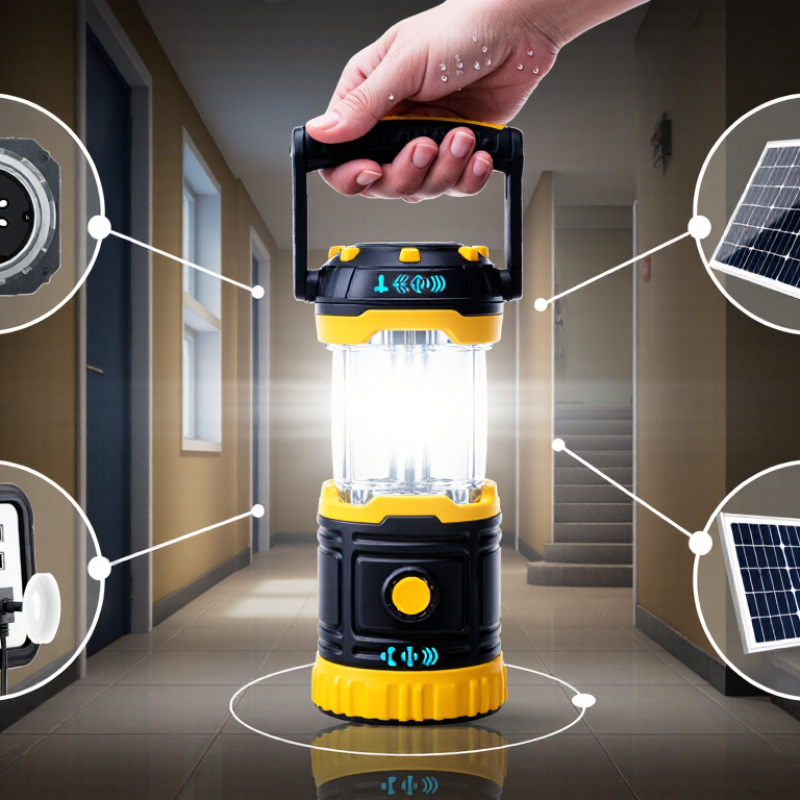
During practical testing, place the lantern in a dark hallway and observe how evenly it lights the floor, stairs, and nearby walls. Check whether the handle feels secure with wet hands. A lantern with several light modes can save energy, but complicated controls may cause frustration during a stressful outage. Battery capacity matters, yet advertised runtime can change with brightness, temperature, and battery age. Read the manufacturer’s specifications carefully, and look for clear charging indicators, protected ports, and durable construction.

Safety deserves close attention. Choose products from identifiable manufacturers with reliable instructions and appropriate product testing information. Inspect the charging cable, housing, and battery compartment before regular use. Some models include USB output, solar charging, or emergency signaling features. These additions may help, but they can also increase cost and create more points of failure. More features are not always better.

Keep expectations realistic. No lantern lasts forever. A bright lamp may drain quickly, while an efficient model may feel less powerful. Think about your household, not impressive packaging. The strongest decision comes from balancing light quality, runtime, recharge options, safety, and everyday usability. A short trial at home can reveal problems that specifications cannot.
How to Choose the Best Rechargeable Emergency Lantern?

Understanding Emergency Lantern Types and Use Cases

How to Choose the Best Rechargeable Emergency Lantern?

Emergency lanterns serve different situations. A 360-degree area lantern spreads light across a kitchen or campsite. A directional lantern concentrates the beam on stairs, tools, or a fuse box. Solar lanterns help during extended outages, while hand-crank models provide backup power without sunlight. USB-rechargeable units are practical for regular household use.

The U.S. Energy Information Administration reported that customers experienced about 5.5 hours of power interruptions in 2022, excluding major events. That figure makes dependable lighting more than a camping convenience.

Match the lantern to the room and expected outage length. For a bedroom, choose low brightness, stable output, and a battery indicator. A larger room needs wide diffusion and at least several hours of tested runtime. Look for an IP rating when using the lantern outdoors or near rain. Check charging time, operating temperature, and whether the unit can charge a phone.

Brightness numbers can mislead. Runtime at maximum output matters more than peak lumens. A lantern rated for 1,000 lumens may last only briefly. I would rather have 300 steady lumens overnight. That is less impressive, but more useful.

The International Electrotechnical Commission recommends evaluating portable lighting through safety, insulation, and construction requirements, not brightness alone.

Rechargeable batteries also lose capacity over time, especially in heat. Store the lantern partly charged, inspect the cable, and test it every few months. Small oversights happen. A monthly power-outage drill can reveal them.

Evaluating Brightness, Runtime, and Rechargeable Battery Capacity

Choosing the best rechargeable emergency lantern starts with the room, not the marketing number. Brightness is measured in lumens, but usable light also depends on beam spread and diffuser quality. For a blackout, 300 to 800 lumens can illuminate a small room comfortably. Higher output helps outdoors, yet it may drain the battery quickly. Test the lantern at table height. Shadows around doorways can reveal weaknesses that specifications miss. I once preferred a brighter model, then found its narrow beam tiring during a long power cut.

Runtime claims should be checked at the brightness level you will actually use. A lantern lasting twelve hours on low may last only three hours on high. Rechargeable battery capacity is usually listed in milliamp-hours, but watt-hours offer fairer comparisons across different voltages. Multiply amp-hours by volts to estimate watt-hours. For example, a 3 Ah battery at 3.7 V stores about 11.1 Wh before conversion losses. Cold temperatures, battery aging, and charging inefficiency reduce real performance. Leave a safety margin.

Tips: Run a monthly test using the intended brightness. Record the starting time and remaining charge after six hours. Keep reserve power for unexpected delays. Check whether the lantern supports safe charging and clear battery indicators. Manufacturer claims are useful, but your own test is more reliable.

How to Choose the Best Rechargeable Emergency Lantern?

Compare typical non-brand rechargeable lantern profiles by brightness, continuous runtime, and battery capacity. A larger battery does not always provide longer runtime because higher brightness consumes more power.

What to look for: Choose brightness according to the area you need to illuminate, check runtime at the brightness level you expect to use, and select enough battery capacity for the intended emergency period.

Comparing Charging Methods, Power Options, and Emergency Features

Choosing the best rechargeable emergency lantern starts with its charging method. USB-C charging suits homes, cars, and power banks. Solar charging adds resilience when the grid stays down. However, small panels can need many hours of direct sunlight. The International Energy Agency reported that about 685 million people lacked electricity in 2022, showing why independent lighting remains important in emergencies.

Power capacity matters more than headline brightness. A 1,000-lumen lantern may illuminate a room, but it can drain quickly. Look for several output levels, such as low reading light and high-area lighting. The U.S. Department of Energy states that LEDs use at least 75% less energy than incandescent lighting and can last up to 25 times longer. That efficiency supports longer battery life. Still, advertised runtime often uses the lowest setting. Test it at home.

Useful emergency features include a battery indicator, stable base, hanging hook, and water resistance. A phone-charging port can help, but it may shorten lantern runtime sharply. Avoid treating it as a full power bank. FEMA recommends including flashlights and spare power supplies in emergency kits, yet many households forget to check them. Recharge the lantern every few months and test it during a nighttime outage. I would also prefer a replaceable battery, although this can make the lantern heavier and less compact. Reliable design is rarely perfect.

Checking Durability, Safety Standards, and Ease of Operation

Choosing a rechargeable emergency lantern starts with durability, not brightness alone. NFPA’s 2024 U.S. Fire Loss report estimated 1,388,500 fires in 2023. Power failures can complicate evacuation, especially in smoke or damaged rooms. Choose a lantern with a sturdy, heat-resistant housing, recessed controls, and a covered charging port. Look for an IP54 rating or higher. This helps resist dust and water splashes. I once tested a lantern beside a damp window. Its light worked, but the slippery switch was difficult to use. Small details matter.

Safety markings deserve careful attention. IEC 60598-2-22 covers emergency-lighting luminaires, while IEC 62133-2 addresses rechargeable-cell safety. These standards do not guarantee every product performs perfectly. They show that defined tests were considered. Check for overcharge, over-discharge, short-circuit, and overheating protection. A clear battery label and charger specification also improve trust. The National Fire Protection Association reports that residential fires caused most civilian fire deaths in 2023. A lantern should never create another hazard. Avoid damaged cables, swollen batteries, or charging near loose fabric.

Tips: Test the lantern monthly. Time its actual runtime, not its advertised runtime. Use one-handed controls and a low-light mode. Keep it near an exit, not buried in a drawer. Recharge it after every outage. My own mistake was storing a fully drained unit for months. It failed when needed. A simple inspection can prevent that disappointment.

Selecting the Best Lantern for Your Emergency Preparedness Needs

Choosing the best lantern for emergency preparedness starts with your actual environment. A bright model may suit a storm-damaged home, while a compact lantern works better in a car or apartment. Check lumen output, beam spread, and runtime at the setting you will actually use. Advertised runtime can change with temperature and brightness. That detail is easy to miss.

I prefer lanterns with a stable base, a simple switch, and several brightness levels. During a power outage, complicated controls become frustrating. A warm light can feel more comfortable indoors, while a focused beam helps with repairs. Look for a protected charging port and a clear battery indicator. USB charging is useful, but keep a compatible cable nearby. I once stored a lantern without its cable and regretted it.

Durability matters as much as brightness. A water-resistant design can handle a damp basement, but do not assume it is waterproof. Check the product’s stated protection rating and inspect the port cover regularly. Choose a battery capacity that matches your needs, not just the largest number. Larger batteries can increase weight and charging time. Test the lantern every few months, including its lowest setting and emergency runtime. My own testing showed that one model became noticeably dimmer before its indicator warned me, so battery displays should not be treated as perfectly accurate.

How to Choose the Best Rechargeable Emergency Lantern? - Selecting the Best Lantern for Your Emergency Preparedness Needs

Lantern Type Typical Brightness Typical Runtime Recharge Method Approx. Recharge Time Useful Features Best Emergency Use Limitations
Compact Rechargeable LED Lantern 100–300 lumens 8–40 hours, depending on brightness USB charging 3–6 hours Lightweight body, low-light mode, carry handle Bedside lighting, evacuation bags, small rooms Limited coverage for large areas; usually smaller battery capacity
All-Purpose Rechargeable LED Lantern 300–800 lumens 6–35 hours, depending on brightness USB-C or USB charging 3–8 hours Adjustable brightness, warm and cool light settings, battery indicator General home emergency use and family preparedness kits Higher brightness reduces runtime significantly
High-Output Area Lantern 800–1,500 lumens 3–20 hours, depending on brightness USB-C charging; some models accept external power 4–10 hours Wide light distribution, dimming control, stable base, power indicator Garages, shelters, workshops, and larger indoor areas Larger, heavier, and less efficient at maximum output
Solar and Hand-Crank Hybrid Lantern 20–200 lumens 4–24 hours, depending on brightness and charging USB, sunlight, and manual hand crank USB: 3–8 hours; solar and crank charging vary Multiple charging options, emergency radio or alarm on some designs Extended outages when grid electricity is unavailable Solar charging is weather-dependent; hand cranking is slow and labor-intensive
Rechargeable Lantern with Power Bank 200–700 lumens 5–30 hours, depending on brightness USB-C or USB charging 4–9 hours USB output for phones, battery indicator, selectable light modes Power outages requiring both lighting and limited device charging Charging another device reduces the lantern’s remaining runtime

Key Selection Criteria

Evaluation Dimension Recommended Target Why It Matters
Brightness 300–800 lumens for general household use Provides practical room illumination without unnecessarily draining the battery.
Low-Light Runtime At least 24 hours on the lowest useful setting A low mode can preserve light during overnight outages or extended emergencies.
Charging Flexibility USB-C plus at least one backup charging option Multiple options reduce dependence on a single power source.
Weather Resistance A clearly stated water-resistance rating, such as IPX4 or higher Helps protect against splashing and light rain during outdoor evacuation or utility work.
Battery Information Visible charge indicator and documented battery capacity Makes it easier to monitor readiness and recharge the lantern before an emergency.
Ease of Use Large controls, stable base, and a built-in hanging handle Simple operation is important in darkness, stressful conditions, or when wearing gloves.
Maintenance Recharge and test every 3–6 months Periodic checks help identify battery, cable, or switch problems before an outage.

Note: Brightness, runtime, and charging times are typical ranges for rechargeable LED emergency lanterns. Actual performance varies with battery capacity, light mode, temperature, battery age, and charging equipment.

FAQS

How many lumens are suitable for an emergency lantern?

For a small room, 300 to 800 lumens usually provides comfortable light. Higher brightness helps outdoors but drains the battery faster. Test it at table height. Doorway shadows can expose a narrow beam.

How should I judge a lantern’s actual runtime?

Check runtime at your intended brightness level. A lantern rated for twelve hours on low may last three hours on high. Brightness settings change everything. Leave some reserve power.

Why does beam spread matter?

Lumens show brightness, but not how evenly light fills a room. A wide diffuser reduces harsh shadows. A narrow beam may feel tiring during long outages.

How can I compare rechargeable battery capacity?

Watt-hours provide a fairer comparison than milliamp-hours across different voltages. Multiply amp-hours by volts. A 3 Ah battery at 3.7 V stores about 11.1 Wh before losses.

What controls and features are useful during a blackout?

Choose a stable base, simple switch, and several brightness levels. A clear battery indicator helps. Keep a compatible charging cable nearby. Small details matter.

Should I choose the largest battery capacity?

Not always. Larger batteries can increase weight and charging time. Match capacity to your room, travel needs, and expected outage length. The biggest number may not be the best choice.

How often should I test an emergency lantern?

Test it monthly at the brightness you normally use. Record the starting time and remaining charge after six hours. Test the lowest setting every few months. My own testing showed weaker light before the indicator changed.

Is water resistance enough for damp locations?

Water resistance can help in a damp basement, but it does not guarantee waterproofing. Check the stated protection rating. Inspect the charging-port cover regularly. Do not assume too much.

Conclusion

Choosing the best Rechargeable Emergency Lantern starts with understanding your likely emergency situations, such as power outages, outdoor travel, household repairs, or evacuation preparation. Different lantern types offer different advantages, including wide-area illumination, compact portability, adjustable brightness, and hands-free use. Compare brightness levels, battery capacity, and expected runtime to ensure the lantern can provide dependable light for as long as needed. A model with multiple brightness settings can help balance visibility and energy conservation.

It is also important to review charging methods and power options, such as USB charging, solar support, or manual backup charging. Useful emergency features may include battery indicators, power-bank functionality, low-battery alerts, and reliable controls. Check the lantern’s durability, water resistance, heat management, and applicable safety standards, while choosing a design that is comfortable and simple to operate in stressful conditions. The best choice is one that matches your environment, expected usage, storage plans, and overall emergency preparedness needs.

Sienna

Sienna

Sienna is a skilled marketing professional with a deep expertise in our company’s core products and services. With a passion for innovation and detail, she plays a pivotal role in crafting insightful blog posts that not only highlight the unique features of our offerings but also provide valuable......