
Choosing a reliable Wall Mounted Emergency Light manufacturer requires more than comparing product photos or advertised prices. This guide introduces China’s top 10 manufacturers through practical criteria, including production experience, technical capability, certification records, quality control, and after-sales support. The evaluation considers products used in hotels, factories, schools, hospitals, warehouses, and public buildings. Details such as battery duration, charging time, illumination distance, housing material, installation method, and emergency switching performance can affect real-world safety. Small differences matter. A stronger enclosure may resist dust. A clearer indicator may reduce confusion during a power failure.
The selected companies are assessed from a buyer’s perspective, not only from promotional information. Factory capacity, testing procedures, customization services, export experience, and communication reliability also receive attention. Where available, evidence may include product documentation, laboratory reports, customer feedback, and manufacturer interviews. However, no ranking is perfect. Public information can change, and some factory claims require independent verification. That limitation should not be ignored. Buyers should request current certificates, sample testing, warranty terms, and installation guidance before placing an order. A dependable supplier should explain battery replacement, maintenance intervals, operating temperature, and emergency lighting standards in clear language. This overview aims to support informed sourcing decisions while recognizing that the best manufacturer depends on project size, application, budget, and regional requirements. Safety deserves careful judgment, not rushed selection.
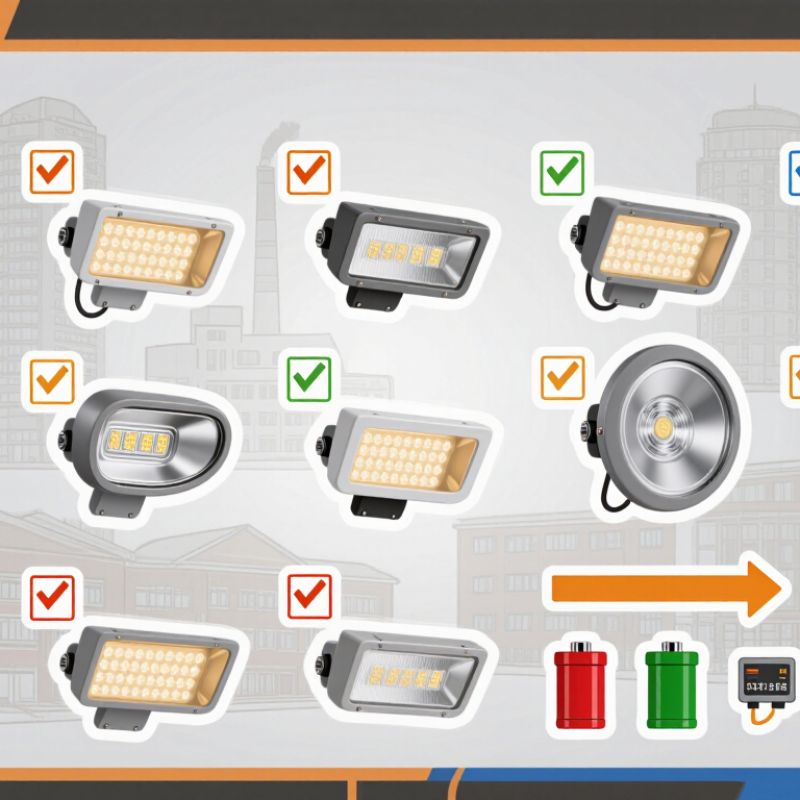
China Top 10 Wall Mounted Emergency Light Manufacturers
Emergency lighting demand expanded with China’s construction, logistics, and public infrastructure activity in 2024. China’s exports reached approximately US$3.58 trillion, rising 5.9% year on year. This broader figure does not isolate wall mounted emergency lights. Customs classifications combine several lighting products, which limits precise product-level comparisons. That limitation matters.
Manufacturers serving this market increasingly focus on LED efficiency, lithium battery systems, and faster emergency switching. Export buyers often request 90-minute or 180-minute backup options. They also examine ingress protection, charging stability, photometric performance, and installation instructions. In warehouses, a narrow wall unit must illuminate escape routes without creating glare. Small details affect safety and maintenance costs.
Trade activity remained strong across Southeast Asia, the Middle East, Europe, and Latin America. However, shipment growth does not automatically prove better product quality. Some suppliers publish incomplete battery-aging data or unclear test conditions. A careful buyer should review factory inspection records, production consistency, and documented certification before comparing prices. My practical concern is simple: export volume receives attention, while long-term battery reliability receives less. That gap deserves closer technical review.
| No. | Data Dimension | 2024 Indicator or Market Scope | Relevance to Wall-Mounted Emergency Lights | Data Basis |
|---|---|---|---|---|
| 1 | Product Definition | Wall-mounted emergency luminaires designed to provide illumination during a mains-power failure or emergency evacuation. | The product scope normally includes self-contained battery units, maintained or non-maintained luminaires, and emergency evacuation lighting. | Product-category definition; manufacturer-neutral. |
| 2 | Main Application Areas | Residential and commercial buildings, factories, warehouses, hospitals, schools, hotels, transport facilities, underground spaces, and public buildings. | Demand is linked to fire-safety design, building occupancy, evacuation-route requirements, and facility renovation. | Application classification used in Chinese building and fire-safety projects. |
| 3 | Primary Chinese Standard | GB 17945-2010, Fire Emergency Lighting and Evacuation Indication System. | Covers system functions, emergency lighting, evacuation indication, control, testing, and safety-related performance requirements. | National Standard of the People’s Republic of China. |
| 4 | Building Design Reference | GB 51309-2018, Technical Standard for Fire Emergency Lighting and Evacuation Indication System. | Influences product selection, layout, emergency-lighting design, centralized or self-contained systems, and installation practice. | National engineering construction standard. |
| 5 | China GDP Growth | 5.0% year-on-year growth in 2024; annual GDP reached approximately RMB 134.91 trillion. | Economic expansion supports commercial construction, industrial investment, building upgrades, and public-infrastructure demand. | National Bureau of Statistics of China |
| 6 | Urbanization Level | China’s permanent-resident urbanization rate reached 67.00% at the end of 2024. | Urban expansion and the upgrading of residential, commercial, and municipal buildings enlarge the addressable installation base. | National Bureau of Statistics of China |
| 7 | China Goods Export Growth | China’s goods exports were approximately RMB 25.45 trillion in 2024, representing about 7.1% year-on-year growth. | This provides the macro export context for Chinese electrical, lighting, and building-equipment manufacturers. | General Administration of Customs of China |
| 8 | Relevant Export Classification | Lighting products may be recorded under HS 9405 categories, including electric lamps and lighting fittings. | Customs data can support export analysis, but wall-mounted emergency lights are not consistently isolated as a standalone public HS subcategory. | HS classification reference; verify the exact national tariff line before commercial reporting. |
| 9 | Typical Export Product Features | LED light sources, lithium or nickel-based rechargeable batteries, self-contained control circuits, wall brackets, test buttons, and status indicators. | These features support lower energy consumption, compact installation, easier maintenance, and adaptation to overseas project specifications. | Common technical configuration; individual specifications vary by model and destination market. |
| 10 | Market-Size Data Limitation | Public Chinese statistics do not generally publish a separate national market-size or export-value series exclusively for wall-mounted emergency lights. | Reliable analysis should combine building activity, fire-safety standards, lighting-industry data, customs records, tender information, and product-level company research. | Methodological note to avoid overstating a narrowly defined product market. |
Request battery discharge records and charging-cycle data. Test the light under realistic load conditions. A label alone proves little. Repeat the test after several cycles.
It creates a crisp, daylight-like beam. This can improve signs in corridors and stairwells. However, reflective rooms may feel harsh. Bright is not always comfortable.
IP65 helps resist dust and low-pressure water jets. It suits indoor and semi-exposed areas. It does not guarantee flood protection. Avoid prolonged outdoor exposure without further verification.
Examine gaskets, wall alignment, and cable entry points. Small gaps can weaken protection. Check the housing after installation. Installation is often the weak point.
Ask for current certificates and model-specific test reports. Relevant documents may include ISO 9001, CE, RoHS, and applicable domestic approval. Confirm that every document matches the exact model. Similar paperwork is not enough.
Check automated assembly, battery testing, and aging facilities. Ask about monthly output, spare parts, minimum orders, and lead times. Large capacity does not guarantee stable quality. Process control matters more.
Test illumination, battery endurance, charging recovery, and temperature performance. Use a dark corridor or stairwell. Look for glare and uneven coverage. One successful sample proves little.
Include batteries, housing, accessories, packaging, tooling, and replacement parts. Calculate shipping and realistic order quantities. The lowest quote may hide weaker cells. Higher prices can disappoint too. Review the evidence.
China’s wall-mounted emergency lighting industry is expanding alongside rising domestic demand and strong export activity in 2024. This overview examines the main product categories, including maintained and non-maintained fixtures, key performance ratings, and the relevance of IEC 60598-2-22 requirements. It also explains essential selection criteria, such as a minimum 90-minute emergency runtime, efficient 6500K LED illumination, and IP65 protection for demanding environments.
The guide presents China’s top 10 manufacturers through a practical evaluation of certifications, production capacity, technical expertise, and product specialization, without focusing on brand promotion. It also provides a factory comparison framework covering laboratory testing, pricing structure, warranty terms, production consistency, and international compliance. Buyers can use these factors to assess a Wall Mounted Emergency Light supplier and identify solutions that balance safety, durability, performance, and long-term value for commercial, industrial, and public applications.
